


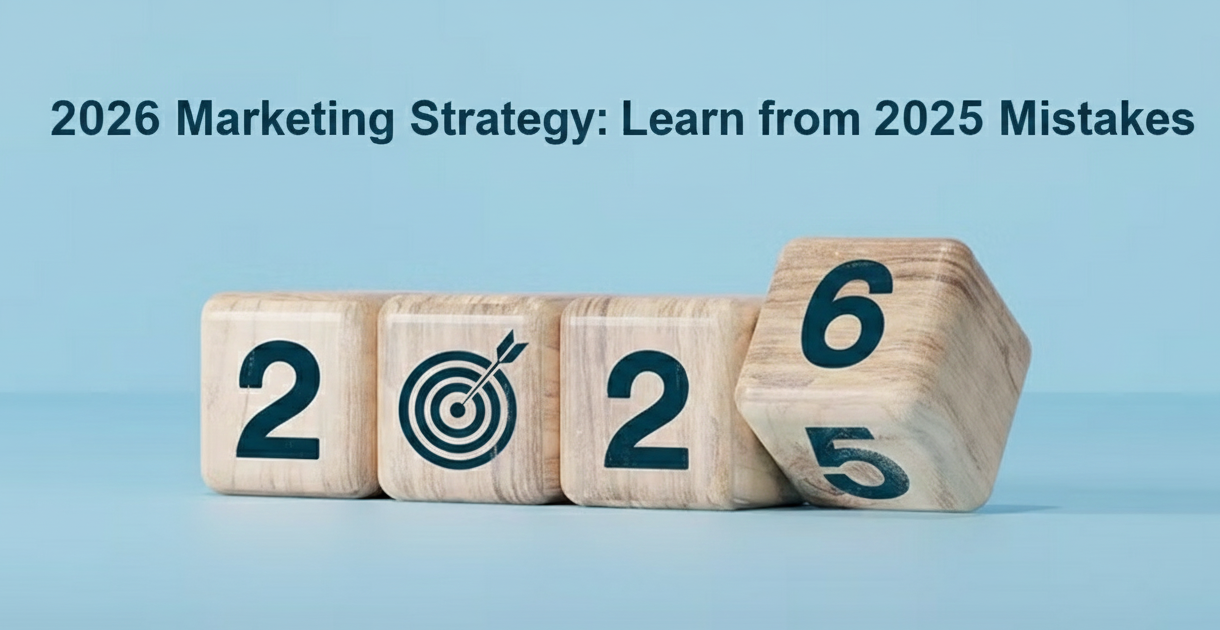
Marketing strategy is more critical than ever as we step into 2026. Marketers are facing a pivotal moment. The lessons from 2025 have become crystal clear: certain tactics that once seemed effective are no longer delivering results, while others are revealing their true value. Shifts in audience behavior, the evolution of digital platforms, stricter privacy regulations, and technological advancements forced brands to adapt at an unprecedented pace.
Some companies thrived, leveraging insights and agile strategies. Others found themselves falling behind, stuck in outdated patterns. The good news is that by analyzing what didn’t work in 2025, brands can proactively shape a stronger, more effective marketing strategy for 2026. This article explores the critical mistakes of the past year and offers actionable guidance to build smarter campaigns in the year ahead.
Where Marketing Strategies Went Wrong in 2025
Over-Reliance on Single Channels
One of the most common mistakes in 2025 was putting too much weight on a single marketing channel. Many brands concentrated heavily on social media, paid ads, or SEO in isolation, assuming that success in one would guarantee overall growth. Unfortunately, platform algorithms changed, audience behaviors evolved, and a heavy reliance on a single channel left campaigns vulnerable.
For example, organic social reach on many platforms declined, paid ads became more competitive and costly, and SEO effectiveness shifted as AI-powered search results began to dominate. Brands that didn’t diversify their channels or connect their campaigns across multiple touchpoints often struggled to maintain engagement and ROI.
Prioritizing Quantity Over Quality in Content
Another key misstep was focusing on producing content in high volume rather than high value. The logic seemed straightforward: more content should mean more reach. However, in 2025, audiences became increasingly selective. They ignored generic blogs, repetitive social media posts, and uninspired video content.
Automation and AI were widely adopted to scale content production, but without human insight and editing, much of it lacked originality, emotional resonance, or actionable value. As a result, engagement metrics suffered, bounce rates increased, and brand credibility weakened. 2025 reinforced that content must serve the audience, providing real value, insight, or entertainment, rather than merely filling a schedule.
Neglecting Data and Analytics
Data-driven decision-making is critical, yet many marketers overlooked proper measurement and analytics in 2025. Campaigns were often launched without clear objectives or the metrics needed to evaluate success. Without tracking key indicators such as conversion rates, engagement, or lifetime customer value, brands couldn’t identify what was working, wasting time and budget on ineffective initiatives.
Moreover, some brands failed to adapt when external conditions changed, such as privacy regulations, platform algorithm updates, or shifts in consumer preferences. This rigidity resulted in underperforming campaigns that drained resources without delivering meaningful results.
Technology Without Strategy
The proliferation of marketing technology in 2025 led many companies to adopt new tools indiscriminately, expecting technology alone to solve complex marketing challenges. Unfortunately, without a strategy to integrate these tools effectively, marketers faced siloed data, disjointed campaigns, and wasted investments.
Success in 2026 will depend on using technology strategically. Tools should enhance audience understanding, streamline workflows, and improve personalization, but they cannot replace clear strategy, creative thinking, or human judgment.
Ignoring Authenticity and Human Connection
Perhaps the most critical lesson from 2025 is that audiences crave authenticity. Overly polished campaigns, faceless messaging, or generic marketing communications failed to resonate. Consumers increasingly value brands that are transparent, human, and relatable.
Companies that neglected this human element struggled to foster loyalty and engagement. Conversely, brands that prioritized trust, shared real stories, and showed the people behind their products strengthened customer relationships, community engagement, and brand advocacy.
Building a Smarter Marketing Strategy for 2026
Learning from the mistakes of 2025 provides a clear blueprint for 2026. The next year will reward marketers who combine strategic planning, creativity, data-driven insights, and human-centric approaches. Here’s how to structure a 2026 marketing strategy that avoids past pitfalls and sets the stage for growth.
Audit and Reset
The first quarter of 2026 should focus on auditing everything from the previous year. Take a close look at each channel, campaign, and piece of content. Which initiatives delivered results? Which ones failed to engage? Which processes or tools added value, and which consumed time and resources without payoff?
Use these insights to reset your priorities. Identify weak spots, eliminate inefficiencies, and set measurable goals for the year. This phase is about creating a foundation for the year ahead, a baseline of clarity from which every strategic decision will flow.
Diversify Channels and Build a Strong Foundation
Once the audit is complete, focus on diversification and strategy implementation. Build an omnichannel presence that balances owned, earned, and paid media. Avoid over-reliance on any single platform; instead, ensure your campaigns are consistent, integrated, and aligned with audience behavior across channels.
During this phase, invest in high-value content. Develop a content calendar that emphasizes depth, originality, and usefulness. Incorporate storytelling, customer success stories, thought leadership, and educational resources. Ensure that data tracking and analytics are fully implemented to measure performance across every channel.
Humanize and Engage
With a diversified foundation in place, shift focus to engagement and authenticity. Launch campaigns that emphasize human connection, transparency, and community. Share real stories from employees, customers, and leaders. Encourage user-generated content and testimonials to enhance credibility.
Community-building should become a priority. Facilitate conversations, forums, or social interactions where your audience can engage meaningfully with your brand. Strong engagement in this phase will build trust and create lasting relationships that go beyond transactional interactions.
Test, Optimize, and Prepare for Next Year
The final quarter of 2026 should focus on testing, optimizing, and fine-tuning campaigns. Run A/B tests on messaging, creative, and channels. Analyze performance metrics to identify what worked, what didn’t, and why. Double down on successful strategies and discontinue underperforming initiatives.
This phase is also the time to begin planning for 2027. Use insights gained from testing and optimization to refine future campaigns, budgets, and content strategies. Treat the marketing roadmap as a living document, flexible enough to adapt as trends, technologies, and audience expectations evolve.
Key Principles for 2026 Marketing Success
- Diversification and Omnichannel Presence – Avoid dependency on a single channel. Spread campaigns across multiple platforms and ensure consistent messaging.
- Value-Driven Content – Prioritize content that educates, entertains, or solves problems. Focus on originality, depth, and storytelling rather than sheer volume.
- Data-Informed Decisions – Implement robust analytics and tracking. Base decisions on metrics and insights, not assumptions.
- Human-Centric Marketing – Build trust through authenticity, transparency, and real human connection. Show the people behind your brand and engage communities meaningfully.
- Strategic Technology Use – Use tools to enhance strategy, efficiency, and personalization. Avoid adopting technology for its own sake.
- Continuous Testing and Optimization – Regularly assess performance, run experiments, and iterate campaigns for continuous improvement.
Conclusion
2025 was a learning year for marketers worldwide. Mistakes, failures, and misaligned strategies highlighted what audiences truly value: authenticity, relevance, and trust. Entering 2026, marketers have a unique opportunity to apply these lessons and design smarter, more resilient strategies that balance creativity, technology, and human connection.
A 2026 marketing strategy built on diversified channels, high-value content, data-driven insights, and authentic engagement will not only correct the errors of the past year but position brands for sustainable growth, stronger relationships, and meaningful impact.
I hope you find the above content helpful. For more such informative content, please visit Martecedge.