



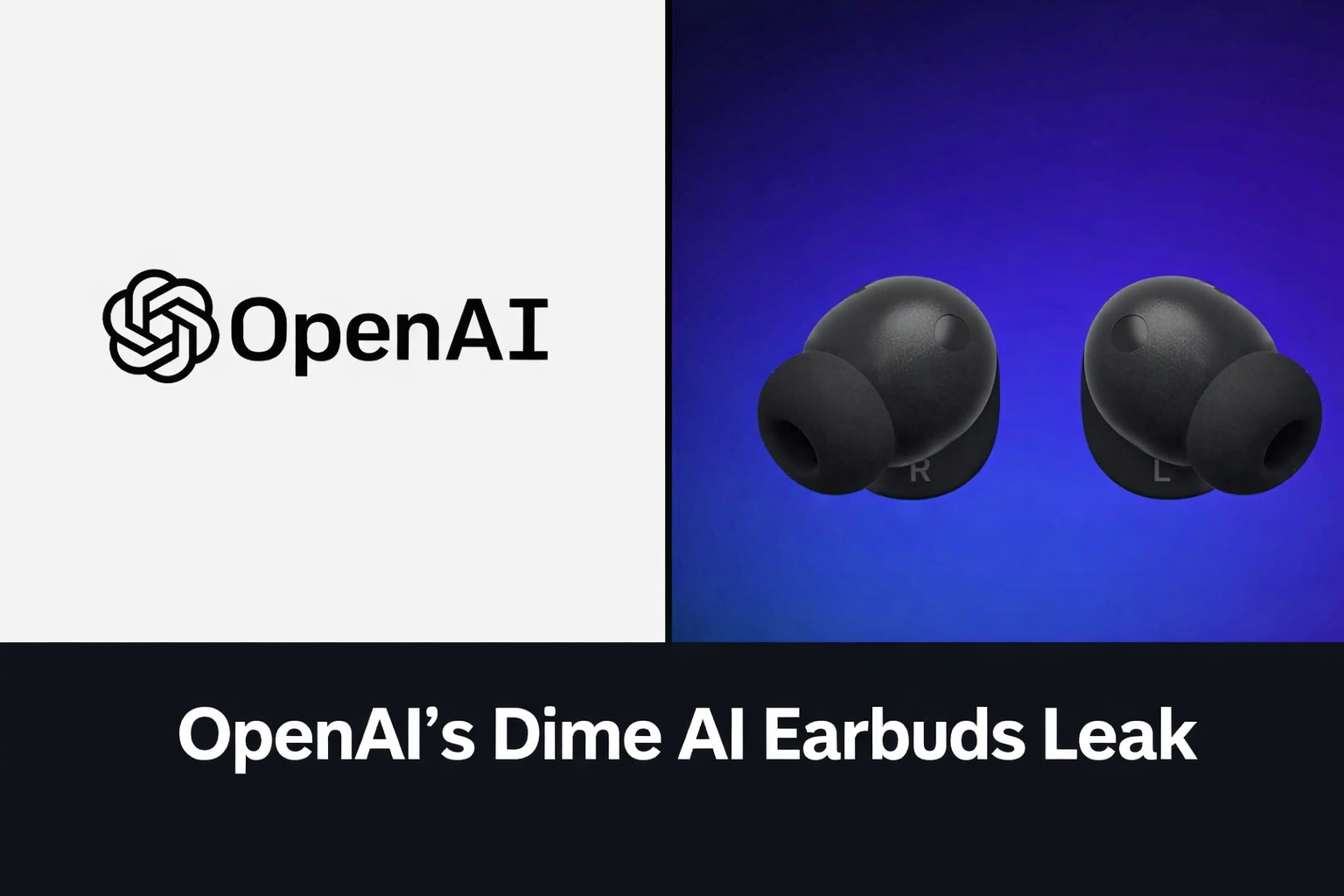
OpenAI, the company behind ChatGPT and other advanced AI technologies, is reportedly entering the hardware space. According to recent leaks, its first hardware product might be codenamed “Dime”, sparking curiosity across the tech world. While OpenAI has been at the forefront of AI software innovations, this step into physical devices could redefine how users interact with artificial intelligence.
What is OpenAI Dime?
Leaks suggest that Dime is likely to be AI-powered earbuds. This aligns with OpenAI’s approach of integrating AI directly into consumer-friendly devices. The earbuds are rumored to focus on audio-first AI interactions, allowing users to leverage ChatGPT and other AI tools through voice commands seamlessly. This move could make AI assistance more natural and accessible in daily life, whether for productivity, entertainment, or personal convenience.
The choice of earbuds is strategic. Audio-based devices provide a hands-free interface, enabling AI to assist users while they commute, exercise, or multitask. It also positions OpenAI to compete in the wearable technology market alongside companies like Apple, Amazon, and Google, who have already introduced voice-enabled devices like AirPods, Echo Buds, and Pixel Buds.
Key Features Rumored in the Leak
While OpenAI has not officially confirmed any specifications, the leaked details give us a glimpse of what Dime could offer:
- AI-Powered Interaction – Users may access ChatGPT directly through the earbuds. This could include voice queries, summaries, and contextual assistance, making the AI experience more hands-free and intuitive.
- Compact Design – The product is rumored to prioritize a minimalist, ergonomic design suitable for daily wear.
- Seamless Integration – Dime is expected to integrate with mobile devices, desktops, and potentially smart home devices, creating an ecosystem where AI is always accessible.
- Noise Cancellation & Audio Clarity – As a premium audio product, Dime may also include high-quality sound and noise cancellation for calls and music.
Why OpenAI is Venturing into Hardware
OpenAI’s move into hardware might seem unexpected, but it’s a logical progression. Over the years, AI has grown from being software-based to a service that can influence the physical world through devices. By creating hardware, OpenAI can control the AI experience more tightly, ensuring that interactions are smooth, fast, and privacy-focused.
Hardware also allows OpenAI to collect contextual data in a controlled way, improving AI models while maintaining user trust. For example, earbuds can provide contextual audio inputs, enabling more accurate speech recognition and real-time assistance.
Potential Market Impact
If Dime succeeds, it could reshape the wearable AI market. Current AI voice assistants are mostly software-driven, requiring a smartphone or smart speaker to function fully. With earbuds designed specifically for AI, users could enjoy:
- Instant access to conversational AI
- Personalized recommendations and summaries
- Improved multitasking with voice-first commands
- A more immersive AI experience without relying on screens
Competitors like Apple and Amazon have invested heavily in voice-first devices, but none have yet combined advanced AI models like ChatGPT with high-quality, everyday wearables. This could give OpenAI a unique positioning in the AI hardware market.
Challenges Ahead
Despite the excitement, OpenAI faces challenges:
- Battery Life & Performance – AI processing in a small device like earbuds could demand significant battery power and efficient processing.
- Privacy Concerns – Users may worry about constant AI listening and data collection. OpenAI will need strong privacy safeguards.
- Market Competition – Established players in the wearable space have strong brand loyalty. Convincing users to adopt Dime will require standout features and reliability.
Expected Release and Timeline
While official announcements are still pending, leaks suggest that OpenAI might unveil Dime within 2026. Early prototypes reportedly focus on AI-first functionality, hinting at a launch timeline designed to gather user feedback before mass production.
The AI community is watching closely, as Dime could serve as a testbed for future AI-driven devices, potentially expanding to smart glasses, AR/VR headsets, or home automation tools in the coming years.
What This Means for AI Users
For consumers and tech enthusiasts, Dime represents a next-generation AI experience. Unlike smartphone or desktop apps, AI earbuds could offer:
- Hands-free productivity – Voice notes, emails, and reminders managed by AI.
- Real-time learning – Instant explanations, translations, or summaries during conversations.
- Entertainment enhancements – Music, podcasts, or audiobooks powered by AI personalization.
For businesses, Dime could also open new opportunities in professional AI applications, including virtual meetings, remote collaboration, and AI-assisted workflows, all without the friction of typing or screen-based interactions.
Conclusion
The OpenAI Dime leak has ignited curiosity across tech communities. While still unconfirmed, the possibility of AI-powered earbuds represents a strategic move into wearable technology, merging AI capabilities with everyday convenience. If OpenAI succeeds, Dime could become the first of many AI-first hardware products, transforming how humans interact with artificial intelligence.
As we await official announcements, one thing is clear: OpenAI is pushing the boundaries of AI beyond software, and Dime might just be the first step toward a fully AI-integrated future.